A specific location, not a broad guess
You should leave with an identified area to open, dig, or access, plus an explanation of how that conclusion was reached.
Serving Oceanside, California & surrounding areas
24/7 Emergency Response
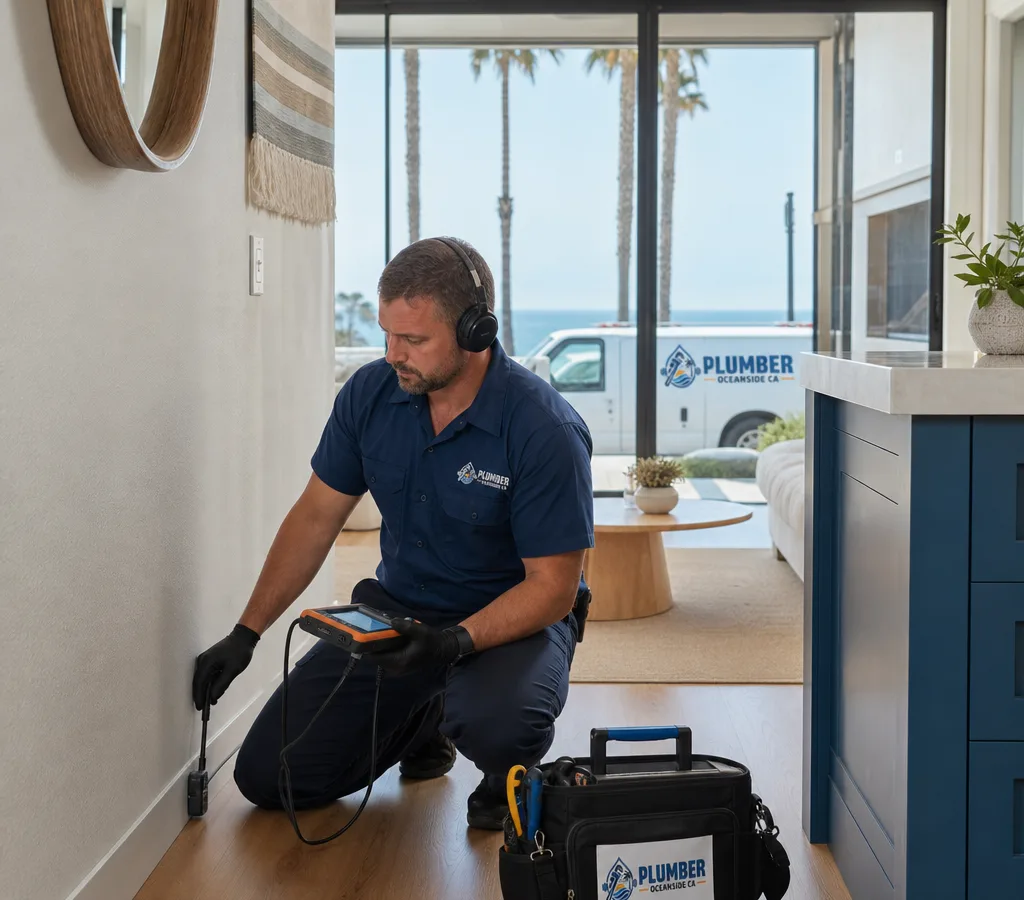
Leak detection service in Oceanside
If you suspect a hidden water leak, we pinpoint the source with non-invasive methods, explain what we found in plain language, and recommend the cleanest repair option for your home or business.
Searching for leak detection Oceanside CA usually means something feels off: a higher water bill, the sound of running water when everything is off, damp flooring, a musty smell, or a yard spot that never dries. The hard part is that the leak is often behind drywall, under a slab, or buried in a yard line.
At Plumber Oceanside CA, the goal is to locate the leak first, then choose the right repair plan. A good detection visit should answer three questions: Where is the leak? What is likely causing it? What is the least destructive path to fix it?
We handle residential and light commercial leak detection in Oceanside, including:
If you are trying to decide who to hire, start with a team that treats detection as its own step, not a guess. The quality of the diagnosis determines the quality, speed, and cleanliness of the repair.
Targeted diagnostic methods
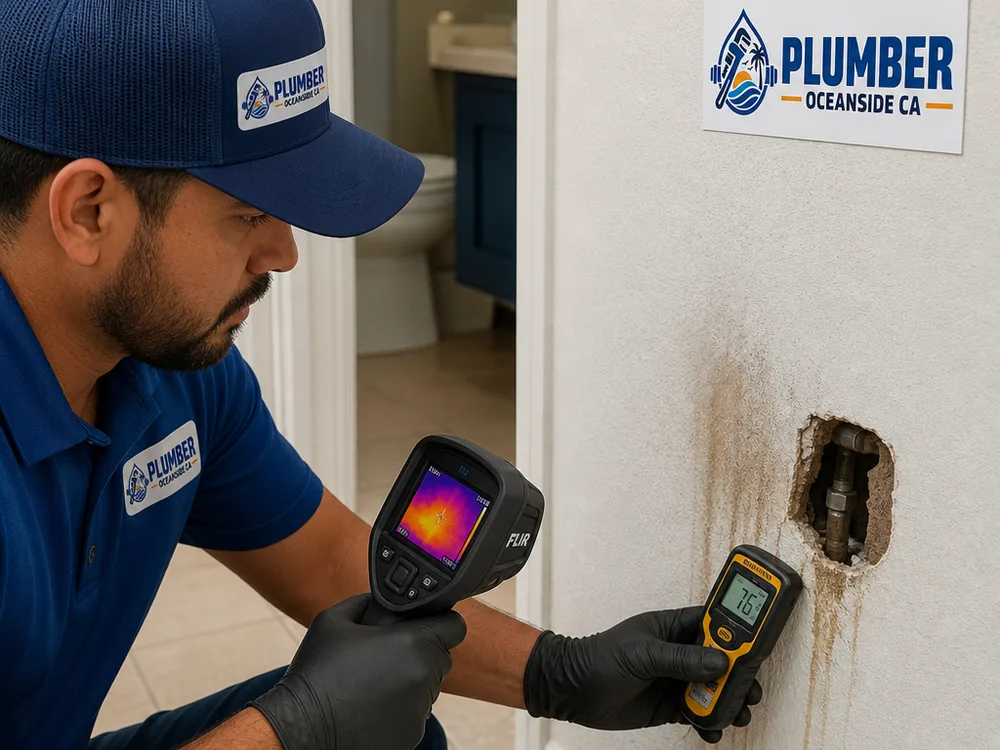
Most hidden leaks can be located with a combination of measurements and targeted tools, then confirmed before any major opening or digging.
Common methods we use during leak detection in Oceanside include:
What you get is a clear explanation of what the readings indicate and what they do not. Moisture can travel, so the wettest spot is not always the leak location. Our job is to separate the symptom area from the actual failure point so the repair stays small and accurate.
Professional visit safeguards
You should leave with an identified area to open, dig, or access, plus an explanation of how that conclusion was reached.
When a leak is under a slab or behind tile, the best plan is the one that fixes it with the least demolition and a straightforward restoration path.
If water pressure is abnormal or a valve is failing, you need to know before a repair is made so the new work is not stressed by the same conditions.
Detection, access, and repair are not always the same scope. We explain what is included and what would change the price if conditions differ.
When helpful, we can share notes on findings and the suspected piping route so you can make an informed decision on repair options.
Oceanside leak patterns
In practice, hidden leaks usually fall into a few patterns. Knowing the pattern helps you spot early warning signs and helps us test the right things first.
Slab leaks often show up as warm spots on flooring, unexplained dampness, or the sound of water movement under the foundation. Locating them accurately matters because a few feet makes a big difference in concrete access.
Wall and ceiling leaks can be supply-side, which is pressurized, or drain-side, which leaks only when a fixture runs. The testing approach changes based on which type it is, so we look at timing, staining patterns, and whether the meter moves when everything is off.
Yard line leaks can be tricky because water can disappear into soil without obvious pooling, especially when the leak is in a deeper run. If the area near the house is dry but the meter shows continuous use, a buried leak is a common suspect.
In Oceanside, we regularly see detection requests tied to:
If you are noticing a spike in usage, damp materials, or water sounds with fixtures off, the fastest way to limit damage is to confirm the source before opening walls or cutting concrete.
From symptoms to a repair plan
We start with what you have observed—bill changes, wet areas, or fixture timing—and verify whether the leak appears continuous or intermittent.
We isolate fixtures or branches when possible and use pressure testing or meter checks to narrow the leak to the most likely section of piping.
We use acoustic listening, thermal imaging, and moisture verification to narrow the location so access stays as small as possible.
You get a clear explanation of where the leak is likely located, what caused it, and the repair approaches that make sense for that material and access route.
If you want us to handle the repair, we confirm the scope and timing. If another trade will do restoration work, we can outline what needs to be opened and why.
Planning the diagnostic visit
Leak detection in Oceanside typically ranges from $250 to $750 for a standard residential diagnostic visit, depending on access, the type of leak, and whether multiple areas must be tested. Simple fixture-area pinpointing can land on the lower end, while slab or buried line detection with extensive isolation and confirmation work trends higher.
Final pricing changes with factors like home size, piping layout, whether the leak is intermittent, and how much of the system must be shut down and tested. The exact cost is confirmed after we review the symptoms on site and outline the scope of the diagnostic work.
Customer experience
“We had a sudden bill spike and could hear water but couldn't find it. They traced it to a small section under the slab and explained exactly where to open the floor. The repair was targeted and we avoided tearing up the whole room.”
“Our leak was showing as a wet spot on the wall, but the source wasn't where the damage was. The detection visit saved a lot of drywall work because they proved where the line was actually leaking.”
Answers before service
You need leak detection when the source is not obvious or the visible damage could be traveling from somewhere else. If you can see a failed angle stop, supply hose, or trap leaking under a sink, that is usually a direct repair. If the meter moves when all fixtures are off, or water appears in a wall, ceiling, slab, or yard with no clear source, a detection visit is the safest first step.
Yes, slab leaks are commonly pinpointed before any concrete is opened by combining isolation testing with acoustic listening and thermal or moisture confirmation. While no method is perfect in every scenario, the goal is to narrow the target area so any concrete access is planned and limited.
If you suspect an active leak, shut off water to the home if you can do so safely, or at minimum stop using fixtures and note whether the water meter continues to move. Take photos of any staining or wet areas and avoid running appliances that use water. If water is near electrical outlets, panels, or fixtures, keep the area dry and do not touch energized components.
Yes, we can diagnose suspected yard line leaks by confirming continuous usage, isolating the home's plumbing where possible, and tracing likely routing to narrow down where the leak is occurring. Buried lines can be affected by soil conditions, prior repairs, and accessibility, so the plan often includes a location estimate plus the cleanest access approach.
A high bill with no visible water often points to a hidden leak on a pressurized supply line, a running toilet that refills quietly, or a buried leak that drains into the ground. A simple first check is whether the meter changes when every fixture is off; if it does, professional leak detection can narrow the cause quickly.
Often, no. We try to confirm using non-invasive testing first, then recommend the smallest access point that makes sense for the suspected location. When an opening is necessary to verify or repair, we explain where and why before any cutting starts.
If you suspect a hidden leak, get a clear location and a practical repair plan before moisture spreads or the bill climbs further.
Call for Emergency HelpLocal diagnostic response
Tell us what you are seeing, when it started, and whether the water meter moves with fixtures off. We will schedule a diagnostic visit, pinpoint the source, and walk you through repair options and pricing before work begins.